The Scale in the Kitchen: One Vietnamese Homestay Is Weighing Every Bottle You Leave Behind
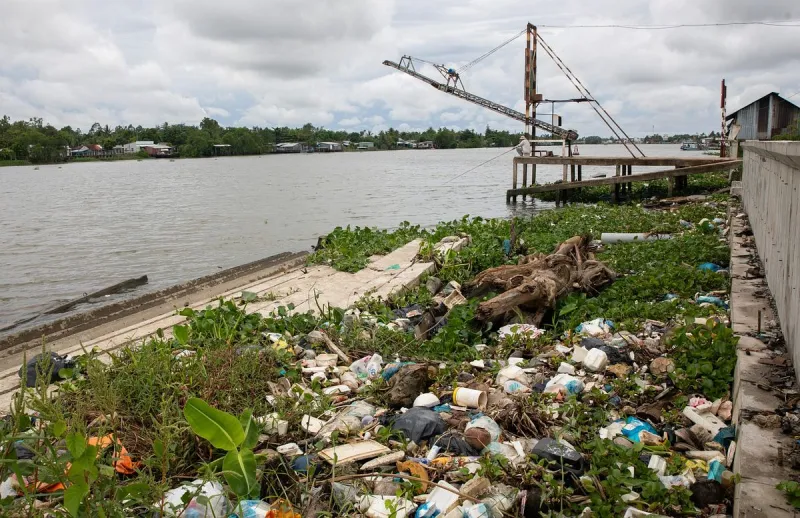
Photo: homestay owner weighing plastic waste on digital scale Vietnam Mekong Delta, via media.urbanistnetwork.com
The Bathroom Scale Nobody Expected
There's a digital scale sitting on the back porch of Hoa's homestay in Ben Tre, and it has ruined more than one American guest's sense of accomplishment.
Hoa Nguyen, who runs a six-room homestay along a coconut canal three hours south of Ho Chi Minh City, started weighing guest waste in early 2023. Not for a certification. Not for a marketing campaign. She did it because her compost pile kept filling up with things that shouldn't have been in it — plastic water bottles, single-use toiletry tubes, takeout containers from guests who'd ordered delivery to a riverside village with no delivery service.
"I wanted to know if the problem was my operation or my guests," she told me over strong iced coffee. "Turns out it was mostly mine. But you can't fix what you don't count."
That instinct — measure it, log it, share it — has quietly become a movement among Vietnam's small eco-lodges. And the data coming out of it says some uncomfortable things about how Americans travel green.
What a Month of Trash Actually Looks Like
Hoa shared her logs from a recent month with me: 31 days, roughly 90 guests, every bag of waste sorted and weighed on checkout days.
The headline numbers surprised her. Food waste from her family-style dinners — locally sourced, zero packaging — was nearly invisible in the totals. What dominated the bins was packaging guests brought with them: snack wrappers from convenience store stops, plastic bottles bought at bus stations, shrink-wrapped fruit purchased at a Saigon market on the way down.
"American guests especially arrive with supplies," Hoa laughs. "Like they're crossing a desert. But there are stores here. There have always been stores here."
Her logs also exposed a hierarchy of habits that would surprise anyone packing bamboo cutlery for an international flight:
- Refill over recycle. Guests who used the homestay's filtered water stations generated roughly 70% less plastic by weight than those who bought bottled water daily — even the ones who diligently sorted their empties for recycling.
- The towel habit barely registers. Reusing bath towels, a staple of US hotel sustainability messaging, showed up as a rounding error in the waste data. Water savings, yes. Trash savings, negligible.
- Toiletries are the quiet killer. Those tiny hotel-style bottles guests bring from home? Hoa's logs show they account for a disproportionate share of non-recyclable waste, because mixed-material tubes are nearly impossible to process locally.
In other words, the behaviors US travelers perform most visibly — the ones we've been trained to feel good about — aren't the ones the scale cares about.
The Audit as a Guest Experience
Here's what makes Hoa's approach different from a hotel asking you to skip housekeeping: she shows guests the numbers.
Each week, she posts a simple handwritten chart by the breakfast table — total waste generated, sorted by category, compared to the same week the previous year. Guests see their own footprint in kilograms, not abstractions. And according to Hoa, that visibility changes behavior mid-stay, not just on the next trip.
"One couple from Portland saw that their week had produced more plastic than a family of four from Hanoi the week before," she says. "They didn't get defensive. They got curious. By day three they were shopping at the local market with one of my cloth bags."
There's a lesson here for the American hospitality industry, where 'sustainability' usually means a laminated card in the bathroom and a slightly shorter wash cycle. Transparency is uncomfortable, and that's precisely what makes it credible.
How to Read a Property's Waste Story Before You Book
You don't need to fly 8,000 miles and hope. Hoa's approach is spreading, and a growing number of Vietnamese lodges now publish waste disclosures — some quarterly, some in real time. Here's how to tell a genuine one from greenwashing:
- Look for numbers, not adjectives. 'Eco-conscious' is marketing. '4.2 kg of waste per guest-night, down from 5.1' is operations.
- Check what's excluded. If a property reports recycling rates but not total waste generated, that's a dodge. Recycling a mountain of plastic still means you created the mountain.
- Ask about the supply side. The best lodges talk about what they don't bring in — bulk refill stations, package-free meals, local sourcing — because upstream decisions beat downstream sorting every time.
- Beware of offsets dressed as data. Planting trees to compensate for an unmeasured footprint isn't an audit. It's a receipt for a feeling.
A quick email before booking — 'Do you track and share your waste data?' — gets honest answers surprisingly often. Properties doing the work tend to be proud of it; properties performing it tend to change the subject.
What the Scale Taught Me
I left Ben Tre with my own assumptions dented. I'd arrived with a reusable bottle and a sense of virtue, then bought two plastic bottles of water at a ferry terminal because I forgot to fill up. The scale doesn't care about your intentions. It cares about your kilograms.
That's the real gift of what Hoa and lodges like hers are doing. Sustainability in travel has long been a conversation about feelings — guilt, aspiration, the warm glow of the right purchase. Waste audits drag it back to arithmetic. And arithmetic, unlike virtue, can be improved.
Bring the refillable bottle. Then actually use it. Hoa's scale will know either way.