Wake Up to the Harvest: Vietnam's Farm Stays Where Your Bill Feeds the Fields
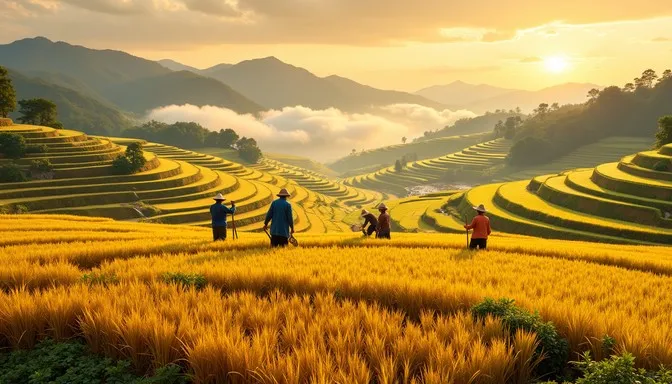
Photo: rice terrace homestay Vietnam misty morning farmer harvest, via images.stockcake.com
There's a moment at dawn in the northern Vietnamese highlands that no five-star resort can manufacture. Mist pools in the valleys between emerald rice terraces carved into mountainsides a thousand years ago. Somewhere below, your host family is already in the paddy, and in an hour you'll be eating sticky rice from that same field.
This is agritourism, Vietnamese-style — and for American travelers chasing the farm-to-table trend, it's the original version.
Why Farm Stays Hit Different
Vietnam's community-based tourism model is quietly one of the most effective conservation tools in the country. When a farming family earns more from hosting guests than from selling land to developers or clear-cutting a hillside, the terraces stay terraces and the orchards stay orchards. Your room rate becomes a land-use decision.
The best programs route money through village cooperatives rather than individual households, spreading the benefit and funding shared projects — trail maintenance, clean water systems, organic certification. It's regenerative travel in the most literal sense: the tourism regenerates the landscape it depends on.
Where to Go
Sapa and Mu Cang Chai, northern mountains. The famous terraced landscapes of Lao Cai and Yen Bai provinces are dotted with Hmong, Dao, and Tay family homestays. In Mu Cang Chai — less developed than Sapa — villages like La Pan Tan and Che Cu Nha offer homestays where September's harvest season turns the hillsides gold. Expect a floor mattress under a mosquito net, communal meals, and zero regrets.
Mai Chau valley. Four hours from Hanoi, this is the gentle entry point: White Thai ethnic minority stilt houses, rice paddies you can bike through, and cooperative-run homestays that have hosted international visitors for two decades. Go midweek and you may have the valley to yourself.
Mekong Delta fruit orchards. Down south, the model shifts to orchard stays in Ben Tre and Can Tho, where families grow rambutan, longan, and coconut. Days involve boat trips through coconut canals, learning to make coconut candy, and dinners where every ingredient came from within a hundred meters of your table.
Questions to Ask Before You Book
Not every "farm stay" is the real deal. Some are hotels with decorative rice paddies. Before booking, ask:
- Who owns and operates the stay? A family or village cooperative is the goal; a tour conglomerate with a farmhouse theme is not.
- What percentage of the rate stays in the village? Reputable community-based tourism programs are usually transparent about this — often 60-80%.
- Can I join the actual work? Harvesting, planting, feeding livestock. If it's only photo ops, keep looking.
- Is food grown on-site? The paddy-to-plate loop is the whole point.
Practical Notes for US Travelers
Book through Vietnamese community-based tourism networks or established responsible-travel operators rather than big booking platforms, which take commissions that thin out the local share. Bring cash in small denominations — many homestays aren't set up for cards. Learn a few Vietnamese phrases; in ethnic minority villages, your host may speak Hmong or Dao as a first language, and English comes third or fourth.
Pack layers for the northern mountains (yes, it gets cold up there) and bug spray for the Delta. And book harvest season — September to October in the north — well ahead; the best homestays have a handful of rooms, not a hundred.
You'll leave with stronger coffee opinions, a new appreciation for manual rice planting, and the knowledge that your vacation didn't just consume a place. It helped keep it farmed.