Twenty Miles From Bowl to Bed: The Vietnamese Eco-Lodges Printing Food Miles on the Menu
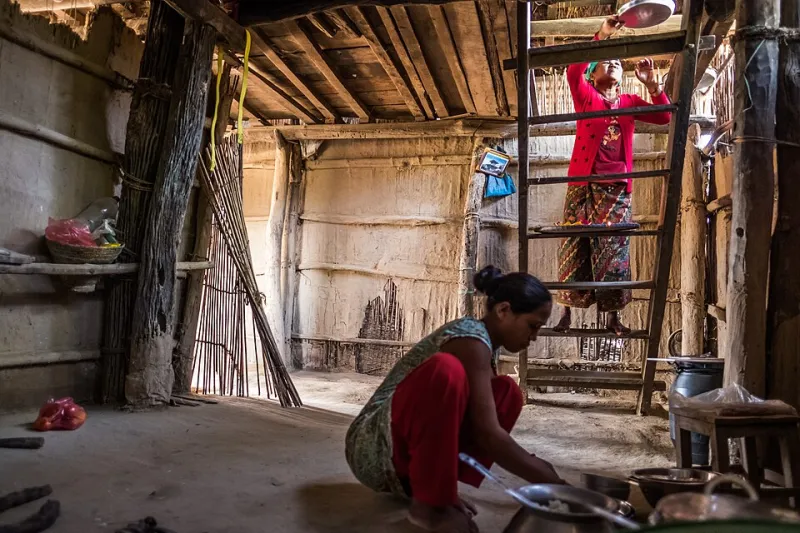
Photo: USAID Biodiversity & Forestry, Public domain, via Wikimedia Commons
There's a moment at breakfast, somewhere between your first coffee and the plate of fresh fruit, when most travelers stop asking questions. The pho arrives. It's good. Case closed.
But at a small but growing number of Vietnamese eco-lodges, the menu itself is asking the questions for you. Not in a preachy, fine-print way — in the form of a single line under each dish: the distance your food traveled to get to your table. Twenty miles. Sometimes eleven. Once, at a homestay outside Ninh Binh, I saw a dish listed at just under two.
It sounds like a gimmick. It's actually a map.
Reading a Menu Like a Trailhead
The idea is simple enough that it borders on obvious: if a lodge claims to be sustainable, the kitchen is where that claim gets tested. Solar panels are visible. Composting is photogenic. But a supply chain is invisible — until someone writes it down.
At Mai Chau Ecolodge, roughly four hours west of Hanoi, the kitchen works almost entirely with growers in the surrounding valley. Rice comes from terraced paddies you can see from the dining deck. The morning greens are delivered by the same families who run weaving co-ops down the road. Guests don't have to take the lodge's word for it; on market days, some walk over and see the stalls themselves.
Further south, in the Mekong Delta, a cluster of small homestays around Ben Tre has taken the same logic to its natural conclusion: when your property sits in the middle of an orchard, "local" stops being a marketing word and becomes a description of the view. Coconut, pomelo, pineapple — the fruit on your breakfast plate was probably hanging on a tree that morning. One host joked that her longest supply chain is the coffee, which travels from the Central Highlands — a distance she seemed genuinely apologetic about.
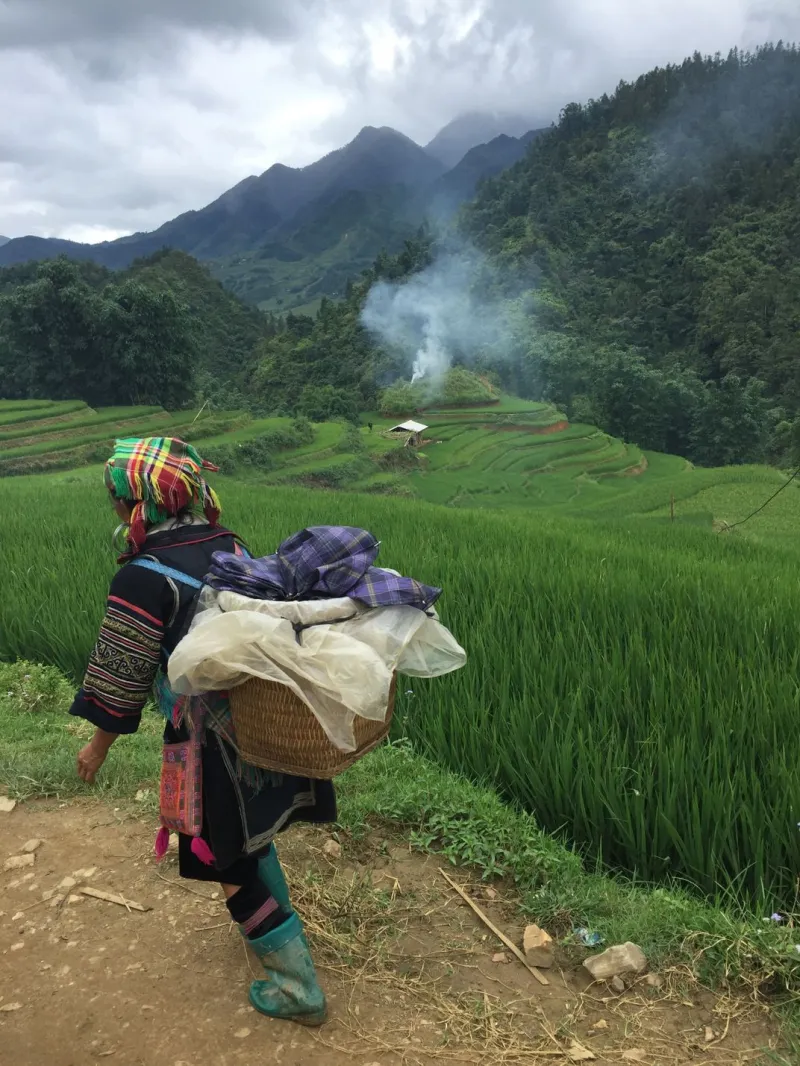
And up in the hills near Sapa, family-run lodges serving Hmong and Red Dao communities have always operated this way out of necessity. What's changed is the framing. Where older guesthouses simply cooked what was available, newer eco-properties are naming their suppliers, printing distances, and turning a subsistence habit into a story American travelers can understand — and pay for.
Why This Matters More Than a Carbon Sticker
If you've ever stood in a Whole Foods produce aisle doing mental math about an avocado, you already get the appeal. Food miles aren't a perfect proxy for environmental impact — a truck of rice can outperform air-freighted asparagus on almost every metric — but in Vietnam, the distance number is really pointing at something else: who gets the money.
Vietnam welcomed roughly 18 million international visitors last year, and the boom has a familiar underside. In destinations like Hoi An and Ha Long, a large share of tourism revenue leaks out to urban suppliers, national distributors, and foreign-owned operators. The vegetables at a big resort might be grown 800 miles away, packed in a city you never visited, and marked up three times before they hit your plate.
Hyper-local sourcing flips that pipeline. When a lodge buys from the village next door, the money doesn't leak — it circulates. The farmer who supplies your breakfast herbs is also the person whose land stays farmland instead of becoming a concrete guesthouse. In that sense, the food mile figure on the menu is less a carbon measurement and more a loyalty statement: this kitchen answers to its neighbors, not a distributor.
For US travelers used to farm-to-table as a premium concept — the kind of thing that adds $12 to an entrée in Portland or Austin — there's something quietly radical about seeing it as the default. In rural Vietnam, short supply chains aren't a lifestyle choice. They're just how people have always eaten.
The Season That Stresses the System
Here's the honest part, though: this model has a pressure point, and it's shaped like a calendar.
Vietnam's peak travel season — roughly November through March, when Americans are escaping winter and the weather in the north is at its best — can triple a lodge's occupancy in a matter of weeks. A homestay that comfortably sources breakfast for twelve guests suddenly needs to feed forty. Local farms that supply a trickle all year can't scale to a flood.
The lodges that handle this well don't pretend otherwise. Several operators I spoke with described a tiered approach: core ingredients — rice, herbs, eggs, seasonal vegetables — stay local through thick and thin, while the volume items that spike in high season get supplemented from regional markets a few hours away. The menu distances get updated, sometimes weekly. It's less polished than a static farm-to-table claim, and more honest for it.
There's also a labor question. Sourcing locally means more relationships to manage — dozens of small farmers instead of one distributor, more conversations, more unpredictability. It's the kind of operational friction that a chain hotel would never tolerate. But that friction is arguably the product. A supply chain with friction is a supply chain with humans in it.
How to Spot the Real Thing
So you're booking a trip and you want breakfast with a short backstory. A few things to look for:
Ask about the menu before you arrive. Genuinely local kitchens can usually name their suppliers off the top of a manager's head. If the answer is a vague "we support local farmers," keep a gentle skepticism handy.
Expect seasonality to be visible. If the fruit plate is identical in January and July, the kitchen is shopping somewhere other than the neighborhood. In Vietnam, eating with the seasons means your breakfast changes throughout the year — that's a feature.
Notice what's not on the menu. Imported berries, out-of-season stone fruit, anything air-freighted. A truly local kitchen has gaps, and the best ones own those gaps.
Stay somewhere small enough to know. The math only works when the kitchen can look its suppliers in the eye. Twenty rooms is a sweet spot.
None of this requires you to interrogate a breakfast cook before your second coffee. But when a menu tells you your morning noodles traveled eleven miles instead of eight hundred, you're not just reading a distance. You're seeing the shape of the place you've chosen to visit — who feeds it, who profits from it, and how much of your travel money actually stays on the trail.