Breakfast Math: What a Bowl of Pho in Hanoi Can Teach Boise About Eating Low-Carbon
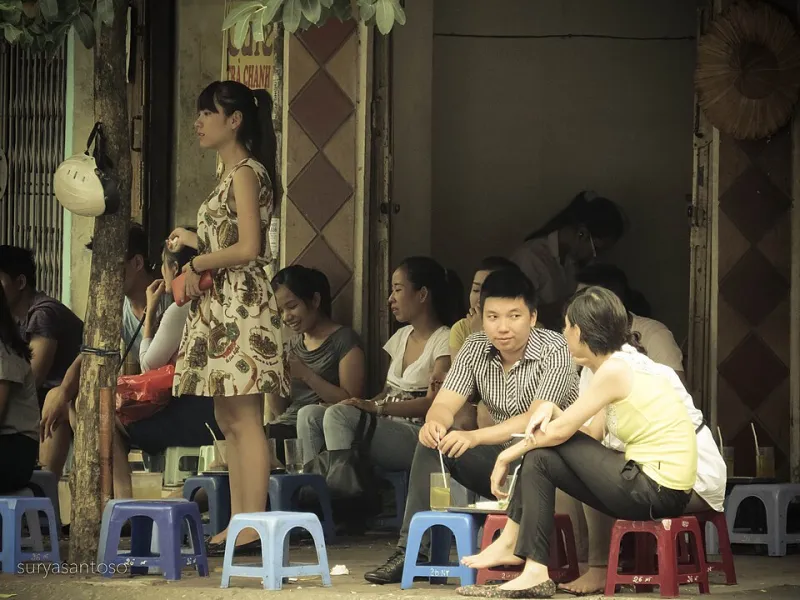
Photo: Surya Santoso, CC BY 3.0, via Wikimedia Commons
There's a moment every morning in Hanoi that American cities have mostly engineered out of existence. Around 6 a.m., plastic stools scrape across the sidewalk, broth pots that have been simmering since midnight get their first customers, and breakfast happens — outside, within walking distance of home, made from ingredients that rarely traveled farther than the person eating them.
I kept thinking about that scene after a conversation with a friend back in Idaho who insisted that eating sustainably meant buying expensive organic everything. It doesn't. Sometimes the lowest-carbon breakfast on the planet is the one a grandmother is ladling out on a Hanoi corner for about two dollars.
Running the Numbers on Two Breakfasts
Let's be upfront: this is back-of-the-napkin lifecycle math, not peer-reviewed science. But the direction of the numbers is hard to argue with.
A typical bowl of pho bo starts with rice noodles, a modest amount of beef (usually 50 to 80 grams), fresh herbs, bean sprouts, lime, and a broth built largely from bones and vegetables — the kind of ingredients that were traditionally the leftovers of the meat trade. The beef is the emissions villain here, no question. But the portion is small, and everything else in the bowl is low-impact: rice paddies in the Red River Delta, herbs grown in peri-urban plots around Hanoi, limes from the central highlands. Rough estimates put a street-side bowl somewhere in the range of 0.5 to 1.5 kilograms of CO2-equivalent, depending mostly on how the beef was raised.
Now the Boise diner plate: two eggs, bacon, hash browns, toast, and coffee. The bacon alone — say 100 grams of pork — carries a heavier footprint than the entire protein content of the pho. Add dairy-heavy coffee drinks, trucked-in produce in winter, refrigerated storage, and the restaurant's energy load, and you're commonly looking at 2.5 to 4 kilograms of CO2-equivalent before you've paid the check.
That's a two-to-fourfold difference. Same meal function. Same morning. Radically different carbon story.
It's Not the Menu — It's the System
Here's the part that stuck with me: the difference isn't because Vietnamese cooks are sitting around calculating emissions. It's structural.
Street food in Vietnam runs on short supply chains by necessity. Vendors shop daily at wet markets because most don't have refrigeration for bulk storage. Portions are sized by decades of household economics, not marketing departments. Nothing is wrapped in plastic, boxed, and shipped cold across a continent. The broth pot is a piece of shared infrastructure — one big energy input feeding hundreds of bowls.
Compare that to the American breakfast pipeline: feedlots in one state, packing plants in another, refrigerated trucks, a supermarket freezer case, and finally a diner kitchen reheating it all. Every step adds energy, packaging, and distance. The plate is the last stop on a very long conveyor belt.
The pho bowl is the last stop on a very short one.
What Travelers Should Actually Notice
If you're visiting Vietnam, this is one of those rare cases where the most authentic experience and the lowest-carbon choice are the same choice. Eat where the stools are low and the menu is short. A vendor who sells one dish, made from ingredients bought that morning, is running a more efficient kitchen than any restaurant with a laminated 12-page menu.
A few things worth paying attention to:
- Seasonality is invisible but real. Street vendors cook what's cheap and abundant right now, which means you're implicitly eating in season.
- Waste is minimal by design. Bones go into broth, herbs go in by the handful, and the bowl comes back to be washed, not tossed.
- Walking distance matters. Most Hanoians don't drive to breakfast. The meal's footprint includes zero miles of your own tailpipe.
Bringing the Bowl Home
The honest takeaway for US travelers isn't "open a pho shop." It's smaller and more doable:
Shrink the meat portion and let grains, herbs, and broth carry the flavor. Shop more often and buy less — the daily-market model cuts food waste dramatically. Learn one pot-based dish that stretches cheap ingredients across a week. And when you travel, eat the way locals do, at the hours locals do. Breakfast at a Hanoi street stall isn't just cheaper and better than the hotel buffet. It's a live demonstration that low-carbon eating doesn't look like sacrifice. It looks like a good bowl of soup, eaten outside, in good company.
My friend in Boise has started making his own broth on Sundays and stretching a single pound of beef across five days of meals. He says it's the best his kitchen has ever smelled. The planet, presumably, agrees.