Where Do All Those Conical Hats Go? Following Vietnam's Souvenirs After the Suitcase Zips Shut
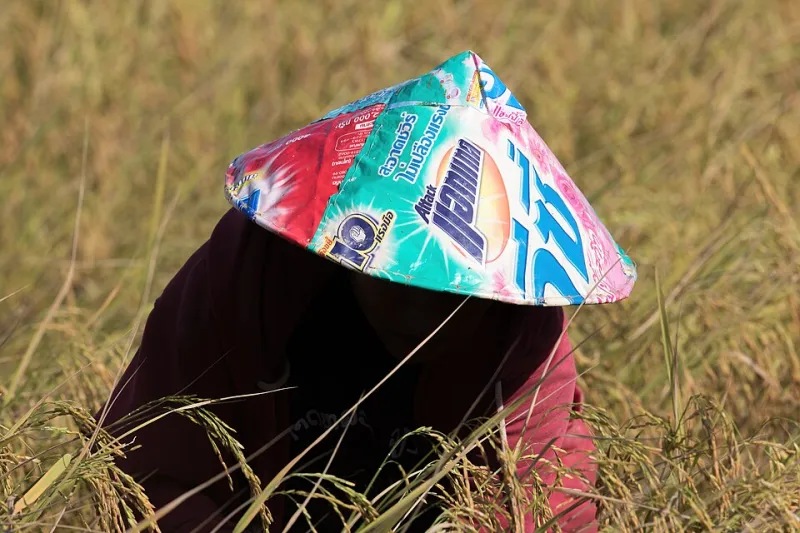
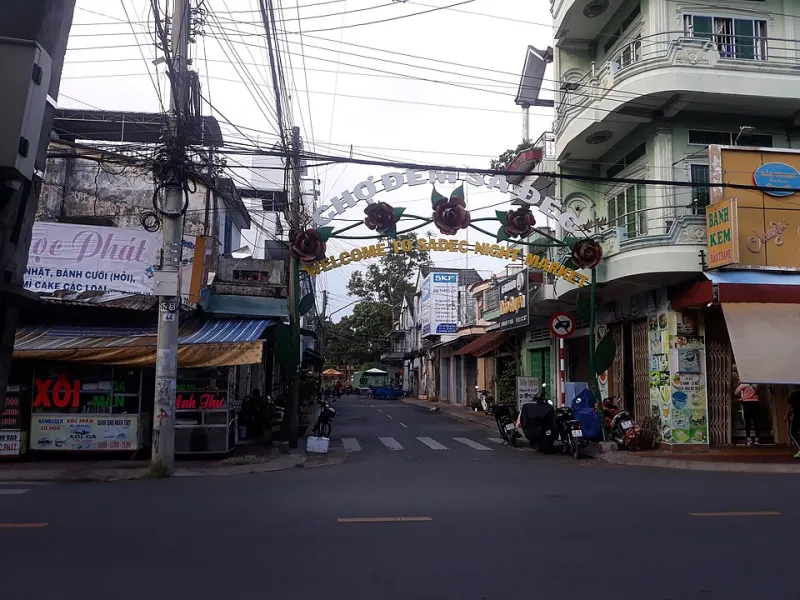
Photo: Basile Morin, CC BY-SA 4.0, via Wikimedia Commons
There's a moment every traveler knows: you're back home, unpacking in your kitchen, and you pull out the conical hat. You bought it in Hoi An for what felt like a steal. You wore it once on a boat. Now it sits on a shelf between a cast-iron skillet and a dead pothos plant.
That hat has a story that doesn't end when your vacation does. And after talking with artisans, shopkeepers, and secondhand sellers in Hanoi's Old Quarter, we've learned that the souvenirs Americans carry home lead wildly different afterlives — some sustaining centuries-old craft traditions, others becoming landfill within a year.
The Hat That Wasn't Made to Last
Here's the uncomfortable truth about the non la: most of the ones sold in tourist zones aren't the real thing. A genuine conical hat from Chuong village outside Hanoi takes a craftsperson several hours to make — palm leaves split, dried, ironed flat with a hot press, then stitched to a bamboo frame with dozens of passes of thread. It should last a decade or more.
The $3 versions sold in bulk? Machine-pressed leaves, glue instead of stitching, frames that crack the first time the humidity of an American summer hits them. Artisans in the Old Quarter told us these hats are, functionally, disposable. They're the fast fashion of headwear.
And here's what happens next: most buyers wear them for a few photos, hang them on a wall as decoration, and eventually toss them. Since the palm leaves are treated and glued, they don't compost well either. One artisan we spoke with put it bluntly: "Tourists think buying anything is supporting us. Buying the fake version actually takes money away from the people who make the real ones."
Snake Wine: The Souvenir You Probably Can't Keep
The bottle with the coiled cobra inside is a hard one to resist — and a harder one to keep. US customs generally prohibits importing wildlife products, and snakes in rice wine frequently fall under restrictions that travelers don't know about until an agent is asking questions at LAX.
Beyond the legal risk, there's the conservation angle. Several species used in snake wine are wild-caught, and some populations in Southeast Asia are under real pressure. If a souvenir involves a dead animal, our advice is simple: admire it, ask questions, and leave it in Vietnam.
Lacquerware, Done Right, Is the Gold Standard
Not all news is bad. Vietnamese lacquerware — the glossy, hand-finished bowls and boxes from villages like Ha Thai — may be the single best souvenir category for the conscientious buyer. A quality piece involves up to twenty layers of lacquer, each sanded and cured, worked by hands that learned the trade from parents and grandparents.
Unlike the disposable hat, a good lacquer bowl becomes a family object. Americans who buy them tend to keep them for decades. That's the souvenir lifecycle we should all be aiming for: something made slowly, bought once, kept forever.
A Buyer's Field Guide
Ask where it was made — specifically. "Vietnam" isn't an answer. A village name is. If the seller can't tell you, assume it was made in a factory that has nothing to do with the craft tradition on the label.
Prioritize the maker over the motif. A slightly imperfect bowl from an actual workshop beats a flawless factory piece every time.
Skip anything with animal parts. Snake wine, coral, shell products, and anything involving endangered species are both legally risky and ecologically costly.
Buy the thing you'll use. The hat you wear to garden in July honors the artisan more than the one gathering dust on a shelf.
Visit the village, not just the shop. Bat Trang's ceramic workshops and Chuong's hat makers both welcome visitors, and buying at the source puts nearly the full price in the maker's pocket.
The Souvenir as a Vote
Every purchase is a small referendum on what kind of tourism you want to exist. The $3 hat says: cheap, fast, disposable. The hand-stitched hat from Chuong says: I see you, I value your skill, and I'm taking a piece of real Vietnam home.
The artisans we met aren't asking for pity purchases. They're asking for informed ones. And honestly, that's the easiest ask in travel — it just requires one extra question before you hand over your dong.