Bamboo Everywhere, Nothing Behind It: A Field Guide to Spotting Fake Eco-Lodges in Vietnam
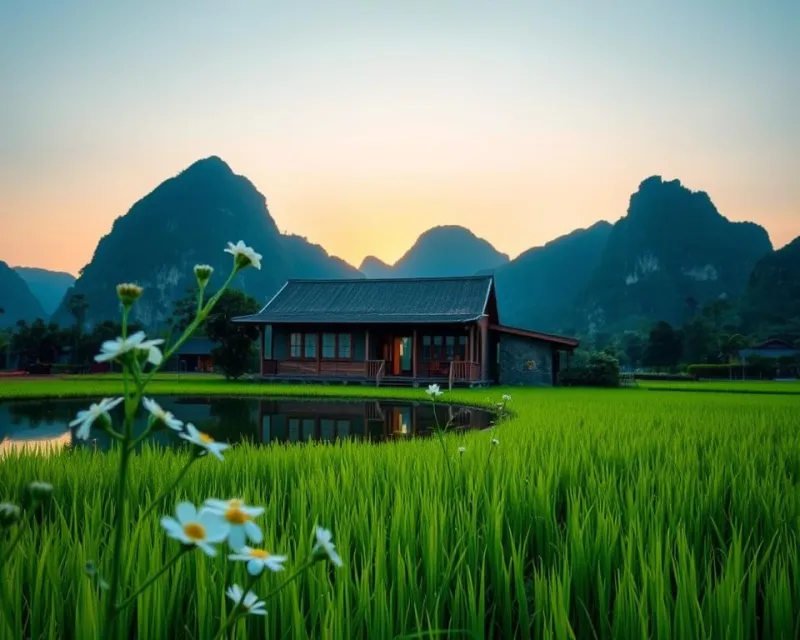
Photo: bamboo homestay rice paddies Vietnam rural guesthouse, via asienrundreise.com
There's a moment every green-minded traveler knows. You're scrolling listings at midnight, jet-lagged before you've even booked the flight, and you find it: a homestay in Ninh Binh wrapped in bamboo, ringed by rice paddies, promising an 'eco experience' in fluent marketing English.
But here's the uncomfortable truth I've learned after years of reporting on Vietnam's lodging sector: bamboo is cheap. Conviction isn't. And in a country where rural tourism has exploded over the past decade, the gap between an actually sustainable operation and one that's merely dressed sustainable has never been wider.
So let's talk about how to tell them apart — before your deposit does the talking for you.
The Rice Water Test
A friend who runs a legitimate community homestay in Mai Chau taught me this one over breakfast. She said: look at the water. Not the bottled water in your room — the water system behind the kitchen.
Genuinely green operations in rural Vietnam almost always have a visible, unglamorous water story: a filtered well, rainwater collection tanks, reused dishwater headed to the vegetable garden. Fake ones skip straight to the amenity — a single-use plastic water bottle 'complimentary' in a room decorated with dried lotus pods.
It's a proxy for something bigger. Operators who've invested in water infrastructure have thought about their footprint when nobody's watching. Operators who've only invested in the look haven't.
Red Flags That Aren't Subtle Once You See Them
- Imported 'eco' amenities. If the soap is bamboo-cased but shipped from a factory in another hemisphere, the bamboo is a costume. Local sourcing beats green packaging every time.
- The word 'eco' doing all the work. Ask what it means. A real operator lights up and talks specifics: composting toilets, solar hot water, the fish pond that eats kitchen scraps. A fake one pivots to the sunrise kayak tour.
- No local faces in ownership. This is the big one. Plenty of 'homestays' in Vietnam are actually owned by outside investors who hire villagers as props. Ask who owns the land. Ask who keeps the money. The answer should be a name, not a hedge.
- Single-use plastics hiding in plain sight. Wrapped chopsticks, mini shampoo bottles, straws with everything. One is an oversight. A pattern is a policy.
- Animals as attractions. If the 'eco experience' includes photo ops with wildlife that should be wild, walk away. No certification offsets that.
What the Honest Ones Say
The operators doing it right tend to be refreshingly blunt. One woman I spoke with near Pu Luong laughed when I asked about her 'sustainability practices.' 'We don't have practices,' she said. 'We have a farm. The waste goes to the pigs. The heat comes from the sun because what else would it come from?'
That's the tell, honestly. Real sustainability in rural Vietnam usually looks less like a brand and more like common sense that predates the word 'eco' by a few centuries.
The operators on the other side of the divide are savvier than you'd expect. One consultant I spoke with — who helps lodges get certified — admitted that some clients just want the certificate photo for their booking page. 'They pass the audit on Monday,' he said, 'and order plastic by Friday.'
Certifications: Useful, But Read the Fine Print
There are legitimate third-party standards operating in Vietnam — EarthCheck, Green Key, and a handful of regional programs. A current certification is a decent signal, not a guarantee. The audit happens once a year. The operation happens every day.
And plenty of the best small homestays can't afford certification at all. A family-run place in Ha Giang with zero credentials and zero waste might beat a certified resort on every measurable except paperwork.
So treat certificates as one data point, not a verdict.
Questions That Cut Through the Marketing
Before booking, send two or three messages. You'll learn more from the replies than from the photo gallery:
- Who owns and operates the homestay, and how many local families earn income from it?
- Where does the water and electricity come from?
- What happens to food waste and graywater?
- Can I buy meals and guides directly from the village, or only through the property?
Real operators answer fast, specifically, and with pride. Greenwashers answer vaguely, slowly, or with another photo of a bamboo bridge.
The Bigger Picture for US Travelers
We bring American expectations to Vietnam — and sometimes that's the problem. We want the 'authentic experience' to be comfortable, Instagram-ready, and effortless. But genuine low-impact lodging is sometimes a cold shower, a fan instead of AC, and a grandmother who thinks you eat too little.
If you want a resort that's green on the surface and conventional underneath, Vietnam will happily sell you one. If you want the real thing, it's out there too — quieter, cheaper, and run by people whose names you'll remember long after the bamboo fades from your camera roll.
Do the rice water test. Ask the awkward questions. Your money is a vote, and in Vietnam's countryside, it counts more than you think.