He Used to Hunt River Giants. Now He Sets Them Free.
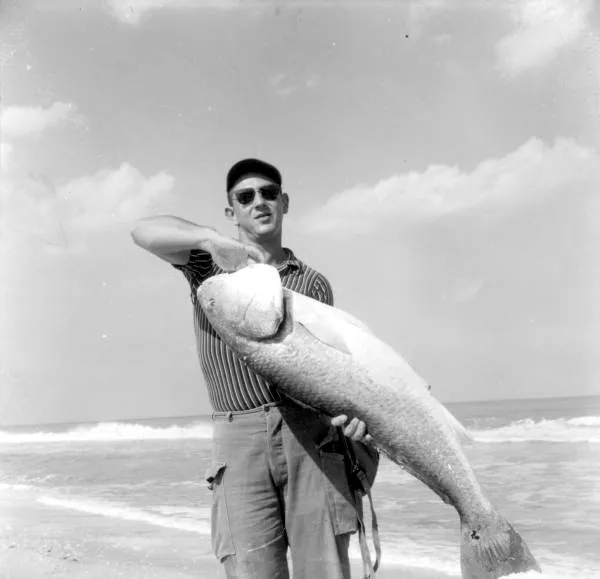
Photo: State Library and Archives of Florida, Public domain, via Wikimedia Commons
The fish that just swallowed Mr. Tuong's bait weighs more than his motorbike. He knows because he caught it — or one like it — back in 1994, when a Mekong giant catfish was a payday, a story, and a village feast all at once. Today, the same man leans over the gunwale of a small eco-charter boat, cradling a juvenile catfish in a wet sling, waiting for the tag reader to beep.
"Back then, big fish meant proud fisherman," he tells me through our guide, laughing at his younger self. "Now big fish means the river is still alive."
Meet the Monsters Worth Saving
The Mekong giant catfish can top nine feet and 600 pounds — roughly the size of a grand piano with whiskers. The giant barb, its chunkier cousin, has tipped scales at over 600 pounds too. Both are critically endangered, victims of overfishing, dams, and habitat loss along a river that runs from Tibet through China, Myanmar, Laos, Thailand, Cambodia, and finally Vietnam's Delta.
Scientists now believe only a few hundred giant catfish may survive in the wild. Spotting one is like seeing a ghost — which is why the fishermen-turned-researchers of the Vietnamese Delta matter so much. Their local knowledge, once used to find these fish, now helps a joint Vietnamese-Cambodian monitoring program tag, track, and release every giant that shows up in their nets.
From Bounty to Bounty Hunter's Redemption
What changed? Money, partly — but not in the way you'd think.
In the early 2000s, conservation groups began paying fishermen the equivalent of a day's wage to safely release any giant species they caught, rather than selling it. Then came something better than payments: purpose. Former hunters were hired as boat captains and field technicians for hatchery release programs run from research stations near An Giang Province.
The best tours in the region now employ these same men. A responsible catch-and-release charter here doesn't target the giants themselves — that's banned — but takes visitors to witness tagging operations, visit the hatchery where captive-bred juveniles are raised, and even help release fingerlings into protected backwaters.
What This Looks Like for Travelers
If you're plotting a Delta itinerary that isn't just floating markets and coconut candy, here's the honest playbook:
- Book a hatchery-linked tour, not a fishing trophy trip. Any operator advertising a chance to "land a Mekong giant" is selling you a red flag, not an experience. Ethical operators partner with the monitoring program and never target listed species.
- Visit the release sites. Around Chau Doc, small-group tours let you carry a bucket of juvenile barbs to the water's edge. It sounds gimmicky. It isn't. Watching a two-inch fish that could one day weigh 400 pounds slip out of your hands rearranges something in your chest.
- Ask where your fee goes. The better outfits route a percentage directly into the fisherman-technician salary fund and hatchery operations. Ask for specifics — a vague answer is your cue to book elsewhere.
- Time it right. The dry season (roughly December through April) offers lower water and better odds of witnessing research activity.
Why Americans Should Care About a Fish They'll Never Eat
Here's the thing: you can fly 9,000 miles, take a slow boat up from Can Tho, and still never see an adult giant catfish. So why go?
Because the Delta is one of the only places on Earth where a community has flipped from harvesting a species to defending it — and tourism is part of that economics. Your boat fee helps keep a former hunter employed as a guardian. It's the same logic that turned Yellowstone's wolf haters into wolf watchers, except the stakes are higher and the animal is the size of a canoe.
There's also a humility lesson here for US travelers raised on bass boats and marlin charters. The Mekong program is quietly rewriting what sport fishing tourism can mean: not conquest, but contribution.
The Uncomfortable Caveats
Green Trails doesn't do happy endings without asterisks, so here's the fine print. Dams upstream — particularly in Laos and China — remain the existential threat, and no number of tourist dollars fixes hydropower politics. Hatchery-raised fish face genetic and survival challenges in the wild. And catch-and-release, even when done perfectly, stresses an animal that evolved without a hook in its life plan.
The fishermen know this better than anyone. When I asked Mr. Tuong whether the giants would make it, he shrugged in that very Vietnamese way that means both "who can say" and "what choice do we have."
"The river fed my father, fed me, fed my children," he said. "Now it is my turn."
Then the tag reader beeped, the sling tipped, and a fish the length of a surfboard vanished into brown water — headed, with any luck, toward another thirty years of being exactly where it belongs.
If you go: base yourself in Can Tho or Chau Doc, plan two nights minimum, and prioritize operators who name their conservation partners on the booking page. Skip any tour with a fish photo wall behind the desk.