The Ranger and the Captain: Two Men, One Bay, and the Fight Over Ha Long's Quiet Corners
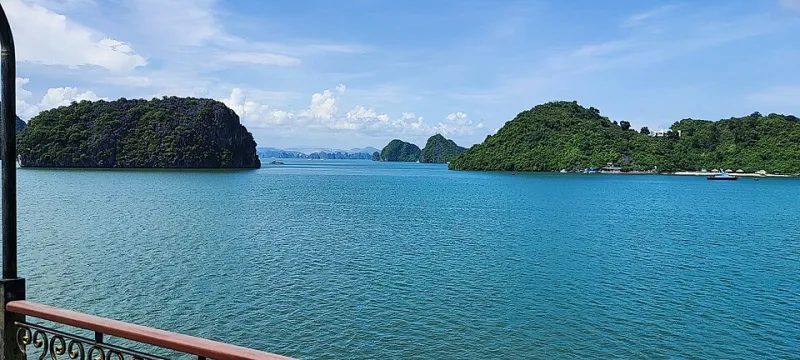
Photo: Shyamal, CC BY-SA 4.0, via Wikimedia Commons
There's a corner of Ha Long Bay where the water goes glassy around six in the morning, before the first junk boat fires its engine. No karst reflections interrupted by wake. No tour-guide megaphones bouncing off the limestone. Just the sound of a white-bellied sea eagle and, if you're lucky, a ranger's longtail puttering along the boundary line.
That silence is not an accident. It's zoned.
The Map Nobody Hands You at the Pier
Most Americans booking a Ha Long Bay cruise see one thing: a bay. What they don't see is the patchwork underneath — a zoning scheme that divides the UNESCO site into core conservation areas, buffer zones, and corridors where boat traffic is funneled like highway lanes. In the strictest zones, anchored within the Ha Long Bay Management Area, commercial vessels need special permission or are excluded entirely.
Nguyen Van Minh (name changed at his request, since he wasn't authorized to speak) has patrolled that boundary line for eleven years. His job, some mornings, is less about poachers and more about persuasion — turning back captains who figure one small boat cutting through a closed zone hurts nothing.
"Everyone thinks their boat is the exception," he told me, scanning the water with binoculars older than my rental car back in Portland. "But a thousand exceptions is just traffic."
The science behind the lines is straightforward enough for any traveler to appreciate. Coral and seagrass beds in the bay's quieter reaches suffer from anchoring — a single careless anchor drop can shred decades of growth. Engine noise disrupts the fish and invertebrates that make the bay's fishing villages viable. And the wake from high-traffic corridors erodes the base of the very karst towers that sell the postcards.
The Other Side of the Bow
Here's the part most eco-travel writing skips: the people on the other side of the line aren't villains.
Captain Hoa runs a 12-passenger wooden boat out of Tuan Chau. He's not running a floating buffet casino — his operation is small, family-staffed, and he composts below deck. His gripe with the zoning isn't environmental. It's mathematical.
"The big operators got their corridors locked in years ago," he says, gesturing toward the main traffic lane where, sure enough, three near-identical cruise ships idled in formation like a naval review. "The small boats get pushed to the same crowded water. The quiet zones — the ones in your magazine photos? We can't take guests there. So everyone crowds the same route, and you tell me which is better for the bay."
He has a point. Congestion in the permitted corridors is itself an environmental problem — oil sheens, anchoring pressure, and the sheer density of vessels during peak season. Conservationists and small operators agree on the disease; they fight over the prescription. Some of the most promising proposals floating around Quang Ninh involve rotating access permits and seasonal openings of quiet zones to certified low-impact boats, spreading both the tourists and the toll.
Why This Matters From 8,000 Miles Away
If you're flying from Los Angeles or Chicago to Vietnam, you've already spent a serious carbon budget getting there. Where your boat goes once you arrive is one of the few things you fully control.
The difference between routes is not subtle. On the main corridor, you'll share sunrise with forty other vessels. In the bay's designated quiet areas — reachable only through licensed low-impact operators — you might share it with kayaks and the sound of your own paddle dripping.
How to Spot a Low-Impact Route Before You Book
US travelers are used to reading reviews. Read these instead:
- Ask for the itinerary, not the photos. Legit low-impact operators name their routes and will say plainly if they avoid core zones. Vague answers like "we go where it's beautiful" are a flag.
- Look for day-kayak ratios. Operators whose itineraries center kayaking and small-craft exploration are physically limited to buffer and permitted zones — which is exactly where you want to be.
- Count the cabins. Boats under roughly 20 passengers simply can't run the mass-market corridor economics. Size is a proxy for route.
- Ask who benefits. Operators that hire from the bay's floating villages and source onboard food locally have a stake in keeping those waters healthy — and are more likely to respect zoning even when nobody's watching.
- Beware the 'secret bay' pitch. If an operator advertises access to areas "other tours can't reach," ask whether that's a permit or a violation. Sometimes the honest answer is that the quiet water is closed, and a good operator will say so.
The Quiet Is a Choice
On my last morning, Minh the ranger idled his longtail at the edge of a closed zone while Hoa's boat cut across the distant corridor, carrying a load of travelers who would never know there was a line in the water at all.
"They're not bad people," Minh said of the passengers. "They just don't know they chose."
But travelers do choose — every time they click "book." Ha Long's silence survives in the zones where boats don't go, and it survives because a ranger in a small boat keeps asking the question. The least we can do, from the booking page of an American laptop, is ask it with him.