8,000 Miles of Guilt: The Honest Math Behind Flying to Vietnam 'Sustainably'
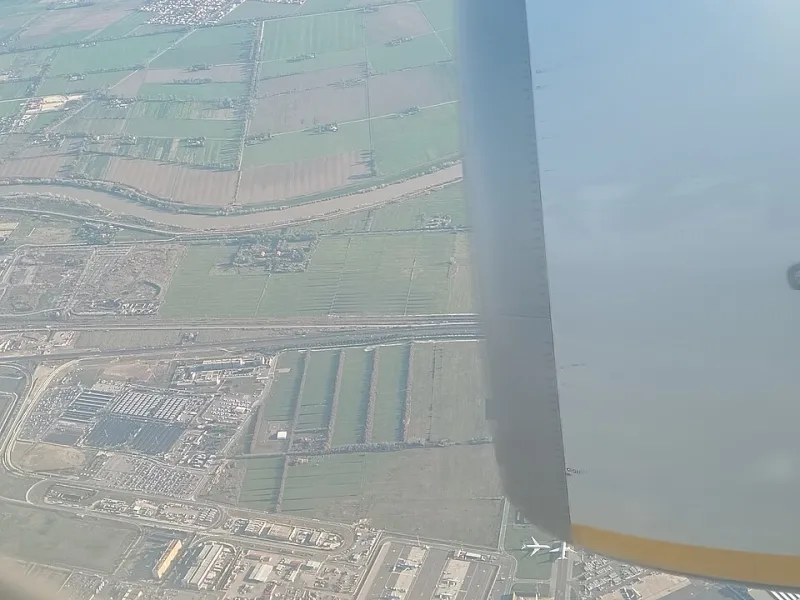
Photo: CAPTAIN RAJU, CC0, via Wikimedia Commons
Let's start with the uncomfortable number: a round-trip economy flight from Los Angeles to Ho Chi Minh City emits roughly 2.5 to 3 metric tons of CO2 per passenger. That's more carbon than the average American produces in three months of driving. If you're reading a site called Green Trails Vietnam, you've probably felt the sting of that math.
We're not going to pretend a reusable water bottle fixes it. Instead, here's what the data actually says — and a framework for deciding whether your long-haul trip earns its keep.
What the Flight Actually Costs
Aviation's climate impact goes beyond CO2. Contrails and nitrogen oxides roughly double or triple the warming effect of the exhaust alone, which is why researchers at institutions like the IPCC put aviation's total radiative forcing well above its raw fuel burn. For a trans-Pacific round trip, that means your true footprint may be closer to 5 tons of CO2-equivalent.
For context: that's about a quarter of what the average American emits in an entire year. One vacation. It's the elephant in every eco-tourism brochure, and most of them hope you won't look down.
Do Offsets Actually Work?
We spoke with operators in Hoi An and Hue who offer carbon-offset add-ons, and the honest answer is: it depends entirely on the program.
The gold standard in Vietnam is forestry. Organizations working on forest restoration in places like Bach Ma National Park and community mangrove projects in the Mekong Delta sell verified credits — look for Gold Standard or Verra certification, never unverified "tree planting" schemes where survival rates are anyone's guess. Mangroves are particularly compelling because they store carbon in soil as well as trees, and they buffer coastlines against the storms climate change is making worse.
But here's the caveat every serious researcher will tell you: offsets are a mitigation tool, not a license. A $30 offset purchase doesn't undo 5 tons of emissions; it funds projects that partially compensate. Treat it as a tax you pay gladly, not absolution.
The Overland Alternative
If you're already in Southeast Asia — a growing number of American travelers are doing multi-month trips — the calculus changes dramatically.
A sleeper train from Hanoi to Da Nang emits roughly 1/10th the carbon per passenger-mile of a short-haul flight. Vietnam's Reunification Express is genuinely one of the world's great train journeys: 30-odd hours from Hanoi to Saigon through rice country, fishing towns, and coastal passes that no airplane window can show you. Buses fill the gaps. For travelers hopping from Bangkok or Phnom Penh, overland border crossings into Vietnam are easier than ever.
The rule of thumb: under 500 kilometers, take the train or bus. Always.
A Decision Framework: When Is the Trip Worth It?
Ask yourself three questions:
1. Are you consolidating? One 3-week trip to Vietnam beats three separate two-week trips anywhere. Trip count matters more than trip length.
2. Does your money stay? A long-haul flight's carbon can be partially justified if your spending funds conservation and communities. Choose homestays, licensed local guides, and national parks where entrance fees pay rangers' salaries. A $2,000 trip where 70% stays local does more good per ton than a resort package where it doesn't.
3. Will it change what you do at home? Travelers consistently report that seeing plastic-choked rivers in Ha Long Bay or melting-glacier-fed floods in Hoi An's Old Town changes consumption habits for years. That's not quantifiable in an offset calculator, but it's real.
If you answer yes to all three, book the flight, buy verified offsets, and travel like it matters. If not, the greenest trip is the one you take closer to home this year — and save Vietnam for one long, deep, low-impact journey.
That's not greenwashing. That's just math with a conscience.