Skip the Crowds: Vietnam's Quietest Emerald Waters Are Waiting Beyond the Postcard
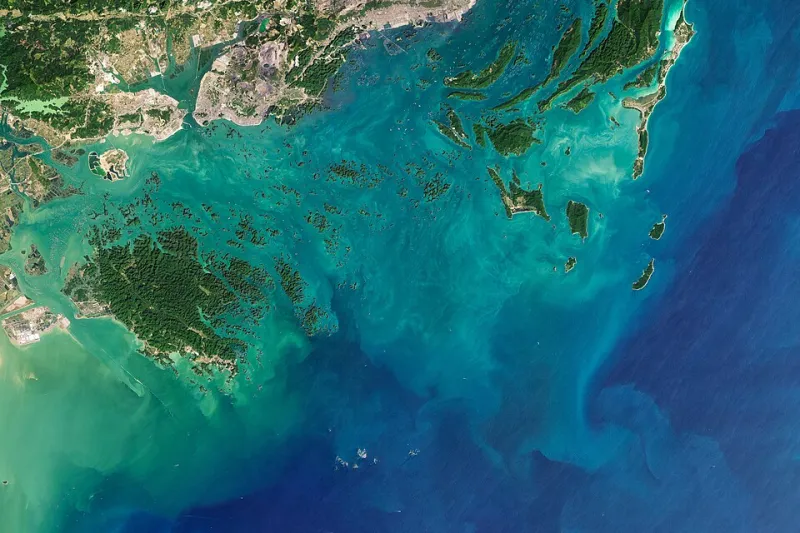
Photo: NASA Earth Observatory images by Joshua Stevens, using Landsat data from the U.S. Geological Survey. Story by Kasha Patel., Public domain, via Wikimedia Commons
Let's be honest with ourselves for a second. If you've seen one drone shot of Ha Long Bay — three hundred identical junk boats idling in jade water — you've basically seen them all. The karsts are genuinely jaw-dropping. The crowds are genuinely soul-crushing. On peak days, more than 600 vessels cruise the bay, and the environmental toll of that traffic has pushed Vietnamese officials to restrict ships and rehabilitate damaged coral zones.
The good news? Vietnam has quietly spent the last decade expanding its protected areas network, and some of the most spectacular landscapes on the planet sit just beyond the Instagram hotspots. Here's where to point your passport instead.
Bai Tu Long Bay: The Bay Next Door
Northeast of Ha Long, Bai Tu Long Bay offers the same limestone towers rising from emerald water — with a fraction of the boat traffic. Part of it falls within Bai Tu Long National Park, and several operators here run strictly limited-departure cruises using smaller vessels with proper waste treatment systems.
Book with operators certified by Vietnam's ecotourism associations or holding international sustainability credentials, and ask directly: how do you handle greywater and plastic waste? Companies worth your money answer without hesitation.
Con Dao: Prison History Meets Marine Sanctuary
Sixteen islands off the southern coast, Con Dao National Park protects one of Vietnam's most important sea turtle nesting sites. Between May and October, rangers on Bay Canh Isle run hatchling-release programs where a limited number of visitors can watch baby turtles make their first dash to the sea.
The flight from Ho Chi Minh City is short, the beaches are powder-soft, and the island's somber colonial prison history gives your trip real depth. Six Senses Con Dao has led the pack on resort-level sustainability here, but family-run guesthouses near the town center often have the lighter footprint and better pho.
The Anamite Mountains: Vietnam's Cloud Forest Frontier
Running along the Laos border, the Truong Son range — the Anamites — hides some of Southeast Asia's least-visited protected forests. Bach Ma National Park, a former French hill station, offers cloud forest trails, waterfalls, and birdlife that would make a Cornell ornithologist weep. Further south, the forests around Phong Nha-Ke Bang — a UNESCO site famous for colossal caves — support community-run trekking cooperatives that hire former loggers as guides. Tourism literally replacing deforestation, one jungle hike at a time.
Pu Luong: Rice Terraces Without the Circus
Sapa gets the tour buses. Pu Luong Nature Reserve, a few hours southwest of Hanoi, gets water buffalo and homestay hosts who remember your name. The terraced rice valleys here are worked by Thai and Muong ethnic communities, and homestay tourism is largely village-managed — meaning your money actually lands where you sleep. Go in the harvest season (September–October) when the hills turn gold.
Getting There Without the Guilt
- Trains over planes. Vietnam's Reunification Express line hugs the coast from Hanoi to Ho Chi Minh City. It's slower, it's cheaper, and it's a rolling window onto the country.
- Refill, don't rebuy. Bring a filter bottle. Vietnam's tap water isn't potable, and single-use plastic is the country's biggest tourism waste problem.
- Hire local, officially. Community-based tourism offices in Ninh Binh, Pu Luong, and Con Dao vet local guides — skip the anonymous booking apps.
- Time it right. Shoulder seasons (April–May, October–November) mean fewer boats, lower prices, and reefs that get a breather.
The Bigger Picture
Vietnam received roughly 18 million international visitors in 2024, and the government has made sustainable tourism a pillar of its post-pandemic recovery strategy. That shift only works if travelers vote with itineraries. The karsts of Bai Tu Long are every bit as photogenic as Ha Long's. The turtles don't care about your follower count. Go where the crowds aren't — the emeralds shine brighter there anyway.